
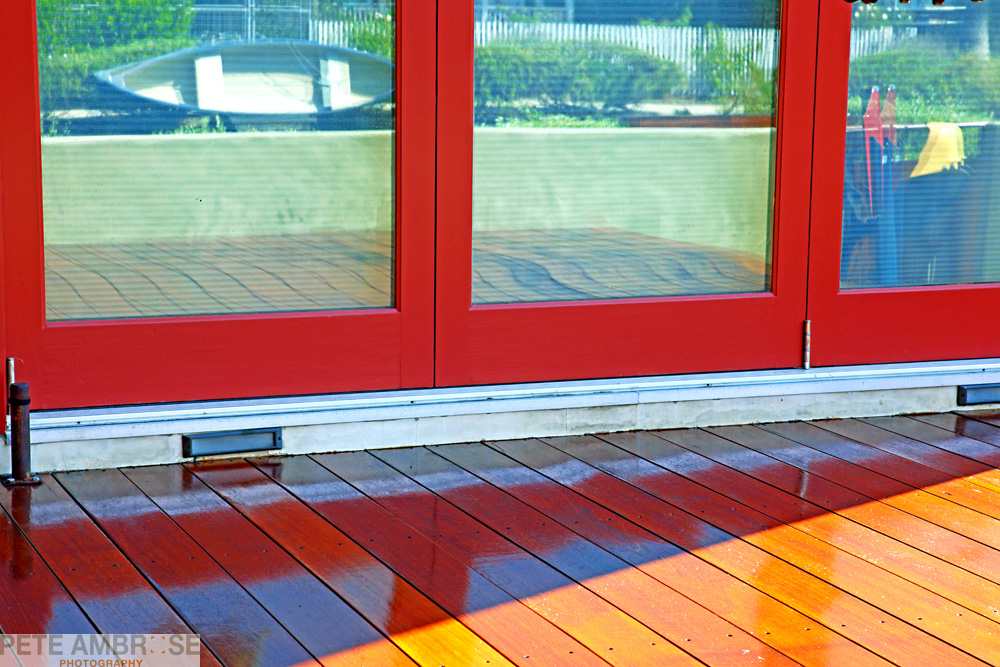
We’ve all had those moments when we return home from a trip or an extended time away and our senses immediately grasp on to what we know to be familiar, the comfort that we can identify with — home. It’s often recognized that memory’s closest ally in the world of human sense is smell. In this new fine art series entitled “Structural Familiarity”, I aim to put together a group of images that take a closer look into the subconscious visual aspects that elicit our loyalty, the recognition of where our hearts claim to reside. Generally, we are unaware of these physical aspects, often taken for granted in the day to day, but this is no different as we can only categorize memories relation to smell in an afterthought. Well, here is your afterthought, as images.
Whether it be the odd tree in your backyard, the lawn chair that has sat uncleaned for years, your family’s idiosyncratic interior decoration, or the wear of the stucco on your house, all of these visuals subtly add up to the culmination of familiarity and comfort – how Home shows ID.
Technically, my approach was to create a body of work that didn’t rely on a unison of imagery in a typological sense, but rather one that got straight to the nuts and bolts of the physical elements I speak of. Making banal imagery interesting and beautiful is always a challenge, beginning a body of work that relied on concept rather than concise visual unity is a whole other challenge. The images that ended up working in the initial phase of the project came together from a formal aspect because of their texture and color. Conceptually, I feel the images proposed a unique look at common and nostalgic imagery that adheres to the theme. The photograph of the stairs for me is a good example. The texture, color and form created by the worn turquoise stairs capsulized an image that functioned well as a stand alone photograph and one that could easily put a frame around a specific area of one’s existence that was an identifier of home.
The physical elements that surround and shelter us seem to act as a similar security blanket to our mind, wrapping our visual subconscious with the sense that we can let down our guard and experience life unattached to the worry and doubt that the outside world creates. I’m loyal to the dingy brown carpet that spreads across my grandmother’s house, the old pictures and southwestern pottery that line it’s interiors. I’m comfortable with the rust on the hinges of our garage, the old oak tree in the backyard. If I could not see these elements, maybe my memory would only have a sense of smell to identify home, and frankly, that would never be enough.
 The Rebel Blog